Parents in Aurora know the sequence: a sippy cup or a bottle of formula rolls under the second-row seat, nobody notices, and a few warm days later the car smells like a dumpster. A quick wipe of the carpet surface seems to help for a day. Then the sun hits the windshield and the sour smell is back, stronger than before.
Milk is mostly water, but it carries fat, proteins and sugar. When it spills, the liquid wicks straight through automotive carpet and spreads in the pad below, often over an area several times larger than the visible stain. Bacteria feed on what is left behind and produce the sharp, rancid odor most people recognize immediately. Heat speeds every step of that process, and a closed car in the sun is about as warm as it gets.
How a dairy spill develops in a warm car
Timing varies with temperature and how much was spilled, but the general progression is predictable.
- First hours
- The liquid is still near the surface. Blotting and extracting now removes most of it.
- First day
- Milk has reached the pad. The surface may look clean, but there is no smell yet, so many people stop here.
- Days two to four
- Bacterial activity builds. A faint sour note appears when the car has been closed in the sun.
- First week
- The odor is constant and strong. The pad underneath may feel stiff or tacky when it dries.
- Weeks later
- Without a thorough clean, the odor returns every time humidity or heat rises, and fragrance only layers over it.
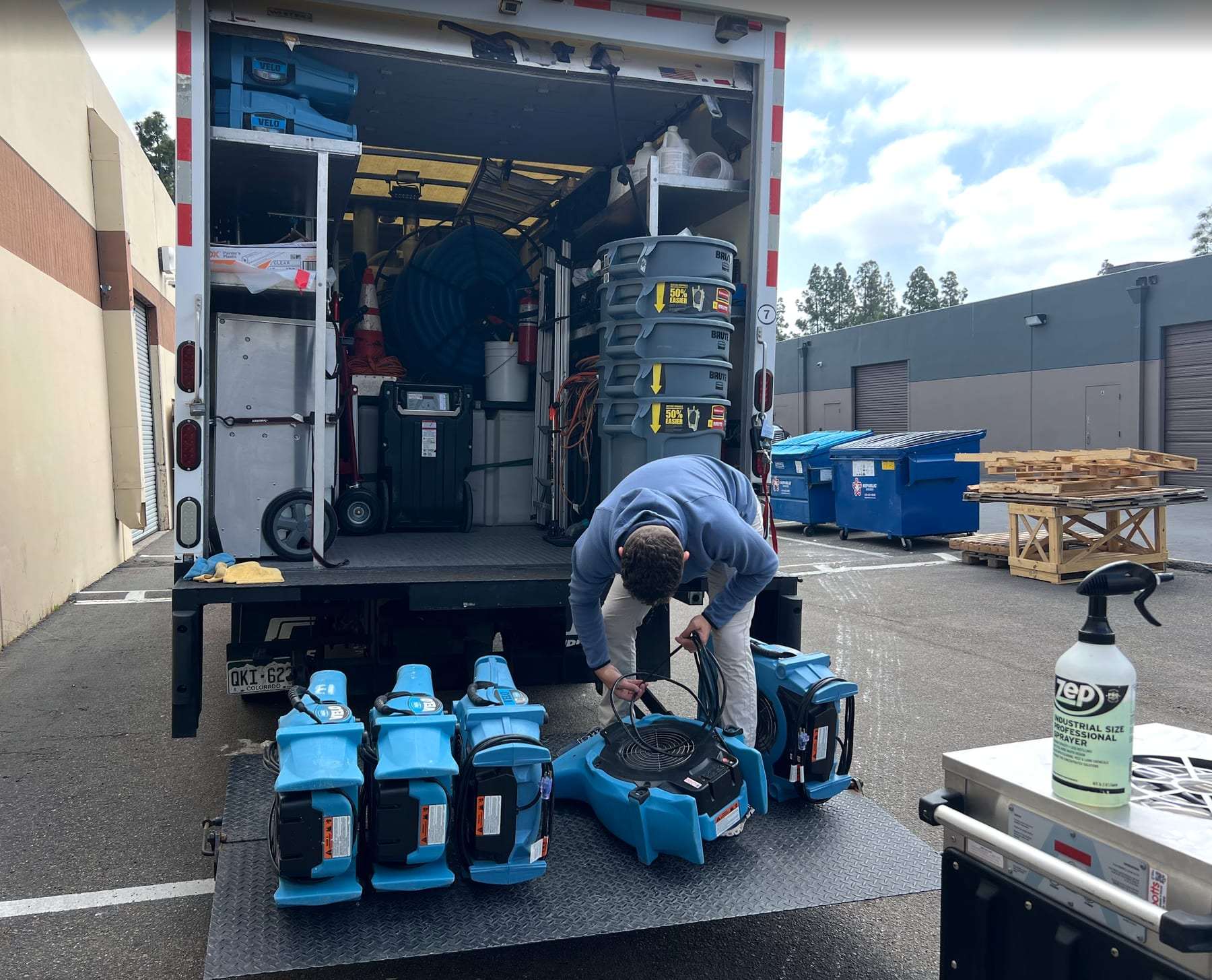
Technician unloading air movers from a box truck. Example of the work involved; the photo does not show a specific property or a job for this site.
Cleaning a milk spill that has already soured
Find the full extent
Press around the stain with a dry paper towel. The pad is usually wet or stiff well past the visible mark. Move or remove the seat if you need to see underneath.
Use an enzyme cleaner
Enzyme-based cleaners break down the proteins and fats that bacteria feed on. Follow the label for dwell time and keep the area damp while it works.
Extract, do not just blot
A wet-dry vacuum or a small upholstery extractor pulls the dissolved residue out of the pad. Blotting with towels leaves most of it in place.
Rinse and extract again
Plain water followed by another extraction pass removes cleaner residue, which can attract dirt and hold odor of its own.
Dry thoroughly
Run fans into the open car or park it in a garage with a dehumidifier. A pad left damp after cleaning starts the cycle again.
Common questions
Will baking soda fix a sour milk smell?
Baking soda can absorb some surface odor, but it does not reach residue in the pad and does nothing about the bacteria feeding on it.
General information for Aurora, not a quote or professional advice. In an emergency, call 911.